

Beyond stenosis: How quantitative coronary plaque analysis is reshaping coronary CT interpretation

The 2025 ACC Scientific Statement on Quantitative Coronary Plaque Analysis marks a turning point in coronary CT interpretation. Discover why cardiac CT is now moving beyond stenosis grading toward comprehensive characterization of atherosclerosis, which patients benefit most from QCPA, which plaque metrics matter, and how the standardized workflow and reporting can guide preventive treatment and monitor plaque progression over time.
The MI paradox: why most heart attacks still happen in “low-risk” patients

Many first heart attacks still occur in patients considered low risk by traditional screening tools. This is known as the MI paradox. Learn why risk factors are not the disease itself, how non-calcified plaque escapes calcium scoring, and how coronary CT angiography and AI-driven plaque analysis are shifting preventive cardiology from estimating risk to detecting silent coronary artery disease before the first myocardial infarction.
Coronary Artery Calcification Score: why CAC assessment has transformed cardiovascular risk detection
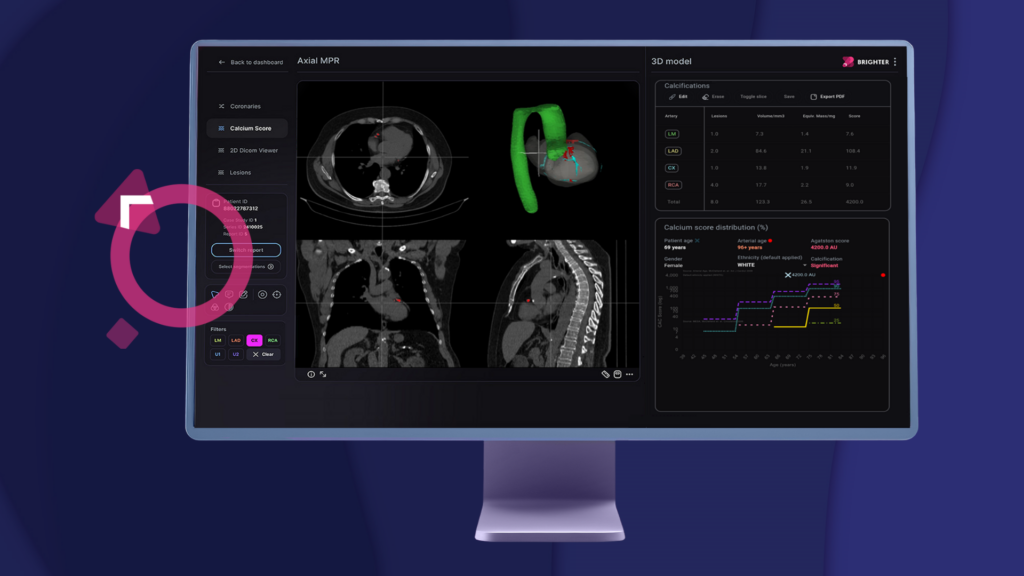
The coronary artery calcification score (CAC score) is one of the most established tools for assessing cardiovascular risk, but a score of zero doesn’t always mean healthy arteries. Learn how CAC scoring works, where its limitations lie, and how AI-powered platforms like BRIGHTER go beyond calcium alone, detecting non-calcified plaque, high-risk features and coronary blood flow for a more complete picture of coronary artery disease.